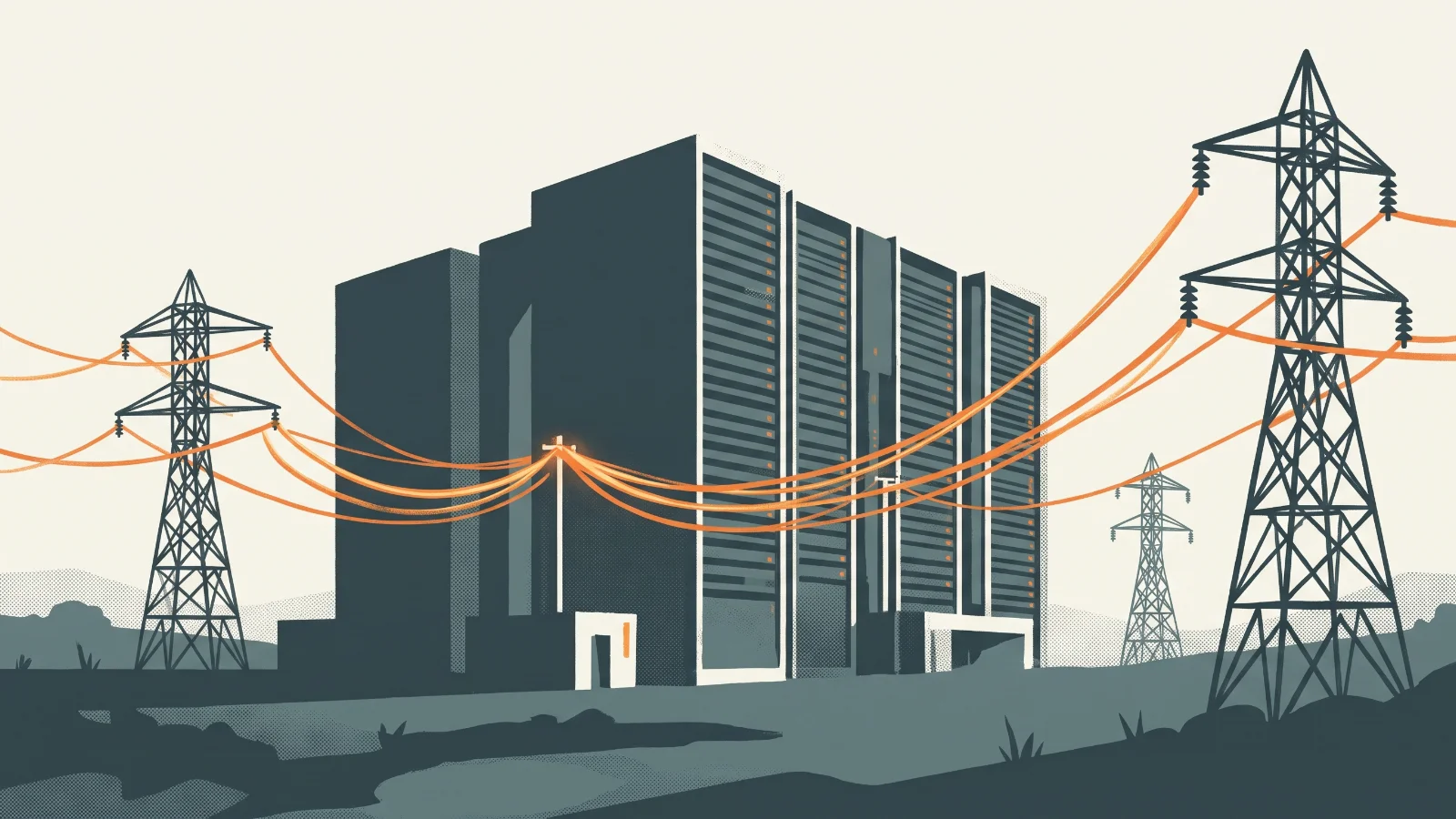
The growing backlash against data centers in the US stems primarily from their massive electricity consumption, rather than being a broad cultural war as some technology companies suggest. In Virginia, where most facilities connect to the existing power grid, an average data center operates with a power capacity of 54 megawatts. This draw exceeds the total power consumption of the Denver International Airport.
New data centers designed for AI training demand significantly more power, prompting a shift away from traditional grid connections. While the smallest viable AI facilities require 300 megawatts, the ideal data centers are estimated to draw up to 6,000 megawatts, which is comparable to the entire city of Chicago. To meet these unprecedented energy needs, companies are increasingly building their own onsite power generation using natural gas turbines in rural areas. Anthropic has reportedly agreed to a $3.4 billion purchase of gas turbines for this purpose.
Although generating power onsite avoids straining local utility grids, the reliance on natural gas turbines and backup diesel generators introduces air pollutants into surrounding communities. In Virginia, recent protests have led to new rules requiring data center developers to cover transmission line costs and face potential power shutoffs during peak demand. As local opposition grows, developers may seek out regions with less resistance, such as the Permian Basin, international locations like Malaysia where Google plans a $15 billion investment, or even space-based facilities.